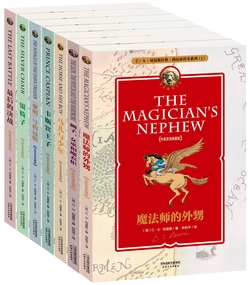
纳尼亚传奇(1-7)(套装共7册)(中英双语典藏版)
C·S·刘易斯
1622人在读
200.2万字总字数
¥1定价
C·S·刘易斯
这套《纳尼亚传奇》是英国著名作家刘易斯于1951年至1956年间创作的系列魔幻故事,分为《魔法师的外甥》、《狮王、女巫和魔衣柜》、《马儿与少年》、《卡斯宾王子》、《“黎明”号的远航》、《银椅子》、《最后的决战》七册,该套图书一经面世便广受赞扬,在英美世界几乎是家喻户晓的儿童读物,也被一些批评家、出版商和教育界人士公认为20世纪最佳儿童图书之一。在半个世纪里,《纳尼亚传奇》的销售达到8500万册,至今已被翻译成30多种语言文字。 《纳尼亚传奇》故事的开始讲述了英国男孩迪戈里和邻家女孩波利偶然进入了一个充满奇幻的世界——纳尼亚,在那里他们经历了一连串的冒险,并见证了纳尼亚王国奇妙的诞生。之后,他们将一颗从异世界带来的种子(苹果)埋在花园里,长成了一颗大树。这棵大树后来被飓风刮倒,又被造成了衣橱,然后又引领了四个小主人公进入神奇的纳尼亚王国的不同时期。故事以正义与邪恶的斗争为线索展开,书中小主人公通过英勇的冒险,与暴君女巫斗智斗勇来拯救纳尼亚的臣民。作者笔下的人物个性鲜明,惹人喜爱。故事情节曲折动人,想象奇特、引人入胜。7册书互有关连,但亦可独立阅读。 《纳尼亚传奇》此套英汉双语典藏版,译者耗时两年精心翻译而成,使读者在享受精彩故事的同时,也能提升英文阅读水平。
。每读两页原著,最多查一个生词 。有很多证据表明,你越是花时间在所谓分析语法、刻意记忆、摘抄总结上,语言习得的效率会越低。如果你真的很喜欢语法、单词、句式,那么你遇词必查也可以,只要不影响流畅的阅读体验和速度,怎样都可以! 。如果你选择的书符合“i+1”原则,那么按理说基本不翻词典你也能大致理解故事的内容。如果说一页有大量生词,那么说明难度过高、应当降级。读闲书、读闲书,以前你是怎么偷读漫画、偷读小说的,那么这里也一样 。此外,千万不要选择双语读本——有研究显示,在母语辅助的任何情境下,几乎任何阅读、聆听的习得效率都会被降低到接近于零 。初入门者需要首先在大量有趣的故事阅读里逐渐增进词汇、句法、语法的能力,而读了十来本原著的人,就应当已经有上外网择书的能力和自由了 。评论区可谓是书籍的试金石。往往通过阅读顶部的几条评论,你就能大致判断这本书的质量和类型 。如果你可以较为轻松地读懂《纳尼亚传奇:狮子·女巫·魔衣橱》,那么英语世界中广大的有趣书籍,对你而言已经触手可及了 。书要自己选,而可以随心选书阅读的自由,是建立在很多很多故事书的阅读基础之上的
我竟然读完了!!从来没有读过一整系列的英文作品,纳尼亚传奇真的带给我很多震撼。喜欢阅读外国儿童文学的原因在于,词汇、句式容易理解(而且我发现自己在阅读过程中能越读越快),且思想独特,天马行空,这和中国儿童文学不太一样,两者各具特色。读完,觉得译者虽然也做了很大努力,但要真正达到心灵为之震撼的程度,还是要回归英文原版。 在此之前,没有想到宗教的力量竟会如此之大,尤其是以这种形式表达出来,时常让人分不清亦真亦假,并不自觉地相信、贴近。每个大人都曾是孩子,大家对儿童文学的喜爱是一脉相承的。儿童文学的写作,不能,也不应该,把孩子当成理解能力低下的读者,如果我们认同有普世价值的存在,作为精神上的独立个体的儿童,自然会对优秀的文学作品给出自己的理解。 惊叹于作者C.S.Lewis富有创造性的思想,从此,纳尼亚的世界,阿斯兰的世界,都将被我铭记在心,在梦里,或是在哪一天发呆走神的时候,或是真的有那么一天,去走走,看看。
Publication Order The books were originally published in this order: The Lion, the Witch and the Wardrobe (1950) Prince Caspian: The Return to Narnia (1951) The Voyage of the Dawn Treader (1952) The Silver Chair (1953) The Horse and His Boy (1954) The Magician’s Nephew (1955) The Last Battle (1956) Chronological Order Sometime after the death of C. S. Lewis, British editions of the books began appearing that were numbered according to the order the stories take place: 本部顺序 The Magician’s Nephew The Lion, the Witch and the Wardrobe The Horse and His Boy Prince Caspian: The Return to Narnia The Voyage of the Dawn Treader The Silver Chair The Last Battle
书的质量一般,有一些错误,比如happy写成了‘appy , 很多h都变成了‘。另外,很多off都写成了of
Spending one month I have finished reading Narnia, a 7 series novel created by C.S.Lewis. I'm now feel sad both because I have been watching Narnia form Her be created to be perished, and The characteres all dead except Susan in the story. And I'm fall in love with Aslan, though I have known that Aslan is in a sense equals Jesus.
2024年9月7日 星期六 祝福早安 天气晴朗 气温24℃《纳尼亚传奇》 C·S·刘易斯可以称得上是一代宗师,被誉为“最伟大的牛津人”。他博学多才,著述颇丰。有人说,“纳尼亚”系列是“儿童的圣经”。要想读懂这套传奇故事,我们就必须对作者的信仰历程有所了解。 刘易斯的父母都是虔诚的新教徒。刘易斯出生后不久,就在爱尔兰的教会受洗。由于青少年时期的叛逆,他曾一度远离了自己的信仰。后来,在《魔戒》的作者、好友托尔金和其他朋友的影响下,32岁时他又回到了上帝的怀抱。回归信仰之后,刘易斯创作出了许多不朽的传世之作。 在“纳尼亚”的奇幻世界中,那位无所不在的狮子阿斯兰正是耶稣的化身。狮子是百兽之王,而圣经启示录则称耶稣为“犹大支派中的狮子”、“万王之王”。刘易斯藉着一系列的故事,轻松地阐释了上帝创造宇宙、魔鬼诱使人类犯罪、耶稣为罪人赎罪舍命、然后从死里复活等基督教教义。 刘易斯曾广泛涉猎欧洲的神话,因此“纳尼亚”系列经典中也出现了小矮人、半人马、潘恩、树精和狼人等形象。大师的想象力异常丰富,不受时空的限制,可谓天马行空,驰骛八极。套用刘勰的话来说,就是“思接千载,视通万里”。加上他的词汇量丰富,时常用诗一般的语言来描绘高山、峡谷、密林、瀑布和清泉等自然景观。因此,尽管译者自诩中英文功底都比较深厚,但不时也会感到“词穷”。有时,为了一句话、一个词,我会多方求教于英、美的朋友,真正体会到了译事之难。 在第一本《魔法师的外甥》中,作者展开想象的翅膀,带领我们“上天”,亲眼目睹了纳尼亚被创造的过程:随着狮子跌宕起伏的歌声,从土壤中接连冒出了树木、花草、动物和飞鸟。狮子赐给一部分动物和飞鸟说话的能力,使他们成为自己的“选民”。 除了“上天”,刘易斯还带着我们“入地”。在《银椅子》中,我们跟随作者来到了黑暗的地下王国,经历了一场惊心动魄的属灵争战。 “七”在《圣经》中是一个完全的数字,因为上帝在七天中创造了宇宙万物。故此,“纳尼亚”系列经典一共有七册书。这个系列中人物众多,场景变幻莫测。在《“黎明”号的远航》中,卡斯宾王等在海上的历险和奇遇扣人心弦;在《马儿与少年》中,我们又体验到了异国情调和大漠风光。而《最后的决战》栩栩如生地描绘了善与恶两个阵营,恶神塔西和白女巫、绿女巫一样,都象征着魔鬼撒旦,它们都逃脱不了失败与灭亡的命运。 何光沪老师在《从岁首到年终》的序言中说过,同刘易斯交上一年的朋友,会使你变得更好。两年多来,与刘大师朝夕相处,虽然不敢说自己变得更好了,但在这个过程中的确获益匪浅,虽苦也甜。 向和平 2013年12月 This is a story about something that happened long ago when your grandfather was a child. It is a very important story because it shows how all the comings and goings between our own world and the land of Narnia first began. In those days Mr Sherlock Holmes was still living in Baker Street and the Bastables were looking for treasure in the Lewisham Road. In those days, if you were a boy you had to wear a stif Eton collar every day, and schools were usually nastier than now. But meals were nicer;and as for sweets, I won’t tell you how cheap and good they were,because it would only make your mouth water in vain. And in those days there lived in London a girl called Polly Plummer. She lived in one of a long row of houses which were all joined together. One morning she was out in the back garden when a boy scrambled up from the garden next door and put his face over the wall. Polly was very surprised because up till now there had never been any children in that house, but only Mr Ketterley and Miss Ketterley,a brother and sister, old bachelor and old maid, living together. So she looked up, full of curiosity. The face of the strange boy was very grubby. It could hardly have been grubbier if he had first rubbed his hands in the earth, and then had a good cry, and then dried his face with his hands. As a matter of fact, this was very nearly what he had been doing. “Hullo,” said Polly. “Hullo,” said the boy. “What’s your name?” “Polly,” said Polly. “What’s yours?” “Digory,” said the boy. “I say, what a funny name!” said Polly. “It isn’t half so funny as Polly,” said Digory. “Yes it is,” said Polly. “No, it isn’t,” said Digory. “At any rate I do wash my face,” said Polly. “Which is what you need to do; especially after—” and then she stopped. She had been going to say “After you’ve been blubbing,” but she thought that wouldn’t be polite. “All right, I have then,” said Digory in a much louder voice, like a boy who was so miserable that he didn’t care who knew he had been crying. “And so would you,” he went on, “if you’d lived all your life in the country and had a pony, and a river at the bottom of the garden,and then been brought to live in a beastly Hole like this.” “London isn’t a Hole,” said Polly indignantly. But the boy was too wound up to take any notice of her, and he went on— “And if your father was away in India—and you had to come and live with an Aunt and an Uncle who’s mad (who would like that?)—and if the reason was that they were looking after your Mother—and if your Mother was ill and was going to—going to—die.” Then his face went the wrong sort of shape as it does if you’re trying to keep back your tears. “I didn’t know. I’m sorry,” said Polly humbly. And then, because she hardly knew what to say, and also to turn Digory’s mind to cheerful subjects, she asked: “Is Mr Ketterley really mad?” “Well, either he’s mad,” said Digory, “or there’s some other mystery.He has a study on the top floor and Aunt Letty says I must never go up there. Well, that looks fishy to begin with. And then there’s another thing. Whenever he tries to say anything to me at meal times—he never even tries to talk to her—she always shuts him up. She says,‘Don’t worry the boy, Andrew’ or ‘I’m sure Digory doesn’t want to hear about that’ or else ‘Now, Digory, wouldn’t you like to go out and play in the garden?’” “What sort of things does he try to say?” “I don’t know. He never gets far enough. But there’s more than that.One night—it was last night in fact—as I was going past the foot of the attic stairs on my way to bed (and I don’t much care for going past them either) I’m sure I heard a yell.” “Perhaps he keeps a mad wife shut up there.” “Yes, I’ve thought of that.” “Or perhaps he’s a coiner.” “Or he might have been a pirate, like the man at the beginning of Treasure Island, and be always hiding from his old shipmates.” “How exciting!” said Polly, “I never knew your house was so interesting.” “You may think it interesting,” said Digory. “But you wouldn’t like it if you had to sleep there. How would you like to lie awake listening for Uncle Andrew’s step to come creeping along the passage to your room? And he has such awful eyes.” That was how Polly and Digory got to know one another: and as it was just the beginning of the summer holidays and neither of them was going to the sea that year, they met nearly every day. Their adventures began chiefly because it was one of the wettest and coldest summers there had been for years. That drove them to do indoor things: you might say, indoor exploration. It is wonderful how much exploring you can do with a stump of candle in a big house, or in a row of houses. Polly had discovered long ago that if you opened a certain little door in the box-room attic of her house you would find the cistern and a dark place behind it which you could get into by a little careful climbing. The dark place was like a long tunnel with brick wall on one side and sloping roof on the other. In the roof there were little chunks of light between the slates. There was no floor in this tunnel: you had to step from rafter to rafter, and between them there was only plaster. If you stepped on this you would find yourself falling through the ceiling of the room below. Polly had used the bit of the tunnel just beside the cistern as a smugglers’ cave. She had brought up bits of old packing cases and the seats of broken kitchen chairs, and things of that sort, and spread them across from rafter to rafter so as to make a bit of floor. Here she kept a cash-box containing various treasures, and a story she was writing and usually a few apples. She had often drunk a quiet bottle of ginger-beer in there: the old bottles made it look more like a smugglers’ cave. Digory quite liked the cave (she wouldn’t let him see the story) but he was more interested in exploring. “Look here,” he said. “How long does this tunnel go on for? I mean,does it stop where your house ends?” “No,” said Polly. “The walls don’t go out to the roof. It goes on. I don’t know how far.” “Then we could get the length of the whole row of houses.” “So we could,” said Polly. “And oh, I say!” “What?” “We could get into the other houses.” “Yes, and get taken up for burglars! No thanks.” “Don’t be so jolly clever. I was thinking of the house beyond yours.” “What about it?” “Why, it’s the empty one. Daddy says it’s always been empty since we came here.” “I suppose we ought to have a look at it then,” said Digory. He was a good deal more excited than you’d have thought from the way he spoke. For of course he was thinking, just as you would have been, of all the reasons why the house might have been empty so long. So was Polly. Neither of them said the word “haunted” . And both felt that once the thing had been suggested, it would be feeble not to do it. “Shall we go and try it now?” said Digory. “Alright,” said Polly. “Don’t if you’d rather not,” said Digory. “I’m game if you are,” said she. “How are we to know we’re in the next house but one?” They decided they would have to go out into the box-room and walk across it taking steps as long as the steps from one rafter to the next. That would give them an idea of how many rafters went to a room. Then they would allow about four more for the passage between the two attics in Polly’s house, and then the same number for the maid’s bedroom as for the box-room. That would give them the length of the house. When they had done that distance twice they would be at the end of Digory’s house; any door they came to after that would let them into an attic of the empty house. “But I don’t expect it’s really empty at all,” said Digory. “What do you expect?” “I expect someone lives there in secret, only coming in and out at night, with a dark lantern. We shall probably discover a gang of desperate criminals and get a reward. It’s all rot to say a house would be empty all those years unless there was some mystery.” “Daddy thought it must be the drains,” said Polly. “Pooh! Grown-ups are always thinking of uninteresting explanations,”said Digory. Now that they were talking by daylight in the attic instead of by candlelight in the Smugglers’ Cave it seemed much less likely that the empty house would be haunted.
每年都值得再读一遍,里面有太多真理的流露,值得细品细挖,就是自己总是容易失去耐心,看到后面有些囫囵吞枣,下次从后往前看试试。感叹上帝赐给路易斯如此的智慧和想象力!
看了一册,虽然大家对这套书推崇备至,但这类儿童读物对于成人而言有一个问题,就是他的世界观是非黑即白的,没有中间地带。成年人喜欢自己去定义对错是非善恶好坏,而不是被简单告知谁是好人谁是坏人。另外一些宗教方面的隐喻太过明显,甚至不能叫做隐喻,成年人读来,至少对我自己而言,教育的意味有点强。 但这套给小朋友读我觉得还挺适合的,英文版也基本可以无障碍看下来,虽然偶尔会出现拼写错误,但是可以更加原汁原味接触西方童话世界里的角色。 成年人的魔法世界估计只能在堂吉诃德,布尔加科夫,马尔克斯那里去寻找了。 不过关于本书作者C.S.刘易斯的一部电影《影子大地》很感人,推荐!
纸本已经看完了,再看一遍电子版