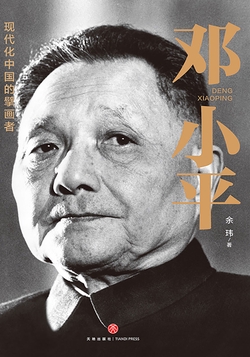
邓小平(一部平民视角的伟人全传!了解现代中国的极佳读本!)
余玮
3.1万人在读
43.6万字总字数
¥23.8定价
余玮
邓小平(1904—1997),其生平几乎贯穿整个20世纪,堪称“世纪伟人”。 作者怀着对邓小平的崇高敬意和深厚感情,在依托丰富史料的基础上,以倒叙的结构,以纪实的手法,从平民的视角,讲述了邓小平坎坷而传奇的一生。讲述了邓小平的家庭出身、求学经历、投身革命、戎马生涯,以及新中国成立后他主政西南日理万机、“文革”蒙尘“三落三起”、雷霆复出拨乱反正、绘制改革开放宏伟蓝图以及提出“一国两制”伟大构想。内容丰富、文笔生动、史料翔实、逻辑严整、构思精巧,鲜明地再现了邓小平的历史功勋和人格魅力。 作品立意新颖,兼具思想性、文学性与可读性,是一部充分反映邓小平的人生历程、伟大贡献、深邃思想和杰出品质的力作,也是了解现代中国的极佳读物。
Deng Xiaoping and the Transformation of China* (Excerpts) Key‑points Recap This part of Ezra Vogel’s book covers Deng Xiaoping’s life trajectory from his revolutionary beginnings through the turbulent years of the Cultural Revolution, his exile in Jiangxi, his political comeback, and the comprehensive reform efforts he led in 1975 under Mao Zedong. 1. Early revolutionary experience (1904‑1969)** Born in Sichuan in 1904, Deng received traditional Confucian schooling and modern elementary education. Influenced by the May Fourth Movement, he went to France for work‑study in 1920 at age 16. Working in factories, he got exposed to labour movements and Marxist ideas. He joined the Chinese Communist Youth League in Europe, earned the nickname “the mimeograph doctor” for editing and printing the magazine *Red Light*. Later he studied at Sun Yat‑sen University in Moscow, receiving systematic training in communist theories. After returning to China, he engaged in underground work in Shanghai, led armed uprisings in Guangxi, then worked in the Jiangxi Soviet base area, where he was purged for being labelled a “Mao faction follower”. He took part in the Long March. During the War of Resistance against Japanese Aggression, he served as political commissar of the 129th Division, cooperating closely with Liu Bocheng (the famous “Liu‑Deng” team), building base areas in the Taihang Mountains. In the Liberation War, he acted as Secretary‑General of the General Front Committee and commanded the decisive Huaihai Campaign. After 1949, as First Secretary of the Southwest Bureau, he stabilized local governance, carried out land reform and promoted major infrastructure like the Chengdu‑Chongqing Railway. Transferred to Beijing in 1952, he held posts including Secretary‑General of the Party and General Secretary after the Eighth Party Congress. He participated in handling high‑level inner‑Party affairs, the Sino‑Soviet debates. In the Cultural Revolution, he was denounced as the “No. 2 capitalist roader”, put under house arrest, and in 1969 exiled to Jiangxi province to perform manual labour. 2. Exile in Jiangxi and reflection (1969‑1974)** In Jiangxi, Deng lived a plain life: he worked as a fitter in a tractor‑repair factory, read widely, walked for long hours every day for physical exercise and deep thinking. Suffering from family misfortune — his son Deng Pufang became paralyzed due to persecution by Red Guards — Deng kept emotional restraint instead of sinking into despair. During this period, he witnessed the real poverty of ordinary Chinese people through his children’s accounts of rural life. He meditated on the root causes of China’s institutional defects and the heavy losses brought by the Cultural Revolution. After Lin Biao’s plane crash in 1971, Deng wrote letters to Mao Zedong, expressing loyalty to the Party and hoping for a chance to work again. In 1973, with Mao’s approval, he returned to Beijing and resumed official duties. He became Vice‑Premier, took charge of diplomatic work, and delivered a landmark speech at the UN General Assembly in 1974, putting forward the theory of the Three Worlds. 3. Comprehensive Rectification in 1975 under Mao Zedong** With Zhou Enlai gravely ill, Mao endorsed Deng to take charge of Party, government and military daily work. Deng put forward the framework of **“Three Important Instructions from Mao Zedong”**: combat revisionism, maintain stability‑unity, and push forward the national economy. Using this as political cover, he launched the all‑round rectification campaign across China. - Military rectification**: He criticized the military’s problems of “swollen ranks, factionalism, arrogance, extravagance and indolence”. He re‑established discipline, cut troop numbers, readjusted military‑leadership groups, restored military‑school education, and pushed for modernization of national‑defense science‑and‑technology. - Industrial & transportation rectification**: Taking the Xuzhou Railway Bureau as a typical case, the central government issued Document No. 9 to eliminate factional infighting, remove disruptive local leaders, restore railway transport order. Then the rectification model spread to coal, steel and other key industries, issuing corresponding central documents to rebuild management systems, stress production efficiency and cadre competence. - Provincial governance**: He tackled chaotic local situations such as Zhejiang Province, replacing faction‑ridden leading groups with experienced veteran cadres. Wang Hongwen lost his real power for failing to resolve local conflicts. - Institutional & intellectual reconstruction**: Deng set up the State Council Political Research Office led by Hu Qiaomu as his think tank. They drafted key documents including *Twenty‑Point Charter for Industry*, the *Academy of Sciences Work Report Outline* and *General Guidelines for Party and Nation’s Work*. He assigned Hu Yaobang to rehabilitate the Chinese Academy of Sciences, bring persecuted scientists back to posts, restore research work and draft long‑term science‑development plans. He also tried to revive literary and academic work. - Foreign‑affairs breakthrough**: In 1975, Deng paid an official visit to France, the first visit to a Western country by a senior CCP leader. The trip gave him direct perception of Western modernization and reinforced his awareness of China’s backwardness. Despite tangible economic improvements brought by rectification, Deng’s reform‑oriented moves drew fierce attacks from the Gang of Four. Mao Zedong gradually grew dissatisfied with the direction of rectification. By late 1975 the political atmosphere shifted, and Deng would soon be purged once again in 1976. --- Reading Notes(英文读书笔记) 1. Character: Deng Xiaoping’s personal qualities Deng’s life is marked by repeated ups‑and‑downs — three major political purges and three comebacks. His time in Jiangxi was not merely punishment, but a period of deep‑dive reflection. Instead of being consumed by personal grievance over family sufferings and political mistreatment, he focused on national institutional crises. He was pragmatic, action‑oriented rather than a theoretical ideologist. Good at seizing existing political resources (quoting Mao’s words to justify rectification), he advanced practical changes within the permitted political boundary. He valued competent cadres, emphasized capable collective leadership instead of relying on one single individual, and prioritized real‑world performance over empty political slogans. 2. Historical meaning of the 1975 Comprehensive Rectification The 1975 rectification is a critical **prelude to China’s later Reform and Opening‑up**. Many policies and institutional thinking trialled in this period foreshadowed the post‑1978 reforms: respect for science and technicians, stress on enterprise rules and material incentives, ending destructive factional struggles, focusing on economic construction. Yet it operated under the ideological constraints of the Cultural‑Revolution era. Deng could not openly repudiate the Cultural Revolution; he had to wrap reform ideas inside Mao’s quotations to fend off political attacks. This reveals the huge political limitations he faced. When Mao withdrew his support, the rectification movement collapsed quickly. Still, its practical achievements and accumulated talent pool laid solid groundwork for the transformation after 1978. 3. Contradictions inside late‑Mao‑era politics Vogel shows the complicated power landscape of mid‑1970s China. Mao Zedong was aware of national chaos and needed Deng’s capacity to restore social and economic order, yet he refused to abandon the core logic of the Cultural Revolution. So he oscillated between supporting and restraining Deng. Zhou Enlai, seriously ill, gave backing to rectification but adopted a more cautious stance. The Gang of Four represented radical forces who fought Deng’s rectification at every turn. Veteran cadres longed for stability and economic recovery and became Deng’s important supporters. Such multi‑faction interplay explains why 1975 reform could achieve partial success but could not sustain. 4. Insight: Experience and vision from foreign contact Deng’s overseas experiences — France in youth, the 1975 visit to Western Europe, UN diplomacy — widened his international horizon. Unlike many domestic leaders who were isolated from the outside world, he could directly observe the gap between China and developed economies. This planted the seed for China’s opening‑up strategy. He realized that modernization could not be achieved behind closed doors; China needed to learn advanced technology and management experience from foreign countries. 5. Limitation of Vogel’s perspective As a Western scholar, Vogel relies on memoirs, interviews and declassified documents. He reconstructs Deng’s decision‑making logic from an external observer’s angle. Readers should note that his analysis reflects a foreign researcher’s interpretation of Chinese politics. When understanding this special historical phase, we also need to cross‑reference Chinese official historical materials for a full‑rounded understanding. Personal take‑away Deng’s 1975 rectification demonstrates a universal political dilemma: when the whole society desires to get out of chaos, reformers must manoeuvre within existing ideological and institutional boundaries to push forward change. Bold practical wisdom and strategic compromise co‑exist in Deng’s governance style. This transitional period bridges the revolutionary era and the reform era, and is indispensable for understanding modern China.
20250713 前后使用 18 个小时读完此书 五星推荐❤️❤️❤️❤️❤️ 本书波澜壮阔的概括了邓小平的一生,充满曲折和坎坷,但是邓小平实事求是,坚韧不拔,考虑长远的伟大气魄和心胸值得学习,邓小平理论是中国特色社会主义的首创,具有深刻的历史意义。邓小平是中国人民的儿子,是中国的一代伟人。 ❤️❤️❤️❤️❤️
邓小平(1904—1997),其生平几乎贯穿整个20世纪,堪称“世纪伟人”。 作者怀着对邓小平的崇高敬意和深厚感情,在依托丰富史料的基础上,以倒叙的结构,以纪实的手法,从平民的视角,讲述了邓小平坎坷而传奇的一生。讲述了邓小平的家庭出身、求学经历、投身革命、戎马生涯,以及新中国成立后他主政西南日理万机、“文革”蒙尘“三落三起”、雷霆复出拨乱反正、绘制改革开放宏伟蓝图以及提出“一国两制”伟大构想。内容丰富、文笔生动、史料翔实、逻辑严整、构思精巧,鲜明地再现了邓小平的历史功勋和人格魅力。 作品立意新颖,兼具思想性、文学性与可读性,是一部充分反映邓小平的人生历程、伟大贡献、深邃思想和杰出品质的力作,也是了解现代中国的极佳读物。
“我是中国人民的儿子,我深情的爱着我的祖国和人民”——邓小平 今天是2026/8/26深圳经济特区成立46周年。深切的怀他,道一声小平您好! 邓小平一个世纪的伟人,他的一生是波澜壮阔的。留法求学,创建红七军,主政江西三县,转战陕北,创建晋冀鲁豫抗日根据地,千里挺进大别山,渡江战役,西南,西藏解放,设立经济特区,改革开放,百万裁军 ,退休制废除职务终身制,提出一国两制构想。他走了留下一个日益繁荣昌盛的中国。 也被他的精神深深感染着,年轻的他心系家国远赴法国留学,赚钱学技术,学先进的马克思主义理论。淡泊名利,对自己的丰功伟绩留给后人评,对长征的贡献他只说了一句“跟着走”。信念坚定,三起三落而不改其志。始终追随毛泽东并且信任他且坚持自己的原则,在毛泽东晚年的一些错误政策能坚持自己的原则,这也是后面叶剑英等老一辈能力挺他做国家领导人的原因之一吧。在党的历史上有两次重要的转折点,“遵义会议”、“十一届三中全会”都是力挽逛澜的大手笔。《实践是检验真理的唯一标准》深深影响着后世的人们。 一个成稳,坚毅,胸怀博大的党和国家领导人。
小平同志是我最崇拜的伟人,崇拜他的人品,崇拜他的坚忍,崇拜他低调内敛。小平同志一生为国,为中国的老百姓谋福利建设美好家园。他这一生事业并不是一片坦途,三起三落,大起大落之时未失意,辉煌腾达之时未得意。总能记得,在他被下放的时候,无法为国家贡献一份力量的时候的落寞,他就在那个方方正正的院子里面,为了有朝一日还能够为国家贡献一份力量,所以他坚持做体育运动,每日踱一万步。在这个院子里也看到了他生活中的烟火气息。会有收获瓜果的欢喜,他会和妻子一起去采摘。小平同志的婚姻是不幸的,也更是幸运的,他经历过婚姻的生死离别、痛彻心扉、爱而不得、白头偕老。一直到最后一任妻子,她遇到了真正属于她的爱情和幸福。他的女儿曾经问过他一句话,您在长征的时候苦不苦?做了一些什么,小平同志回答道,跟着走。小平同志就是如此低调内敛的性格,他热爱着每一份不同的工作,更是在他的高光时刻,选择逐步功成身退。他如此热烈的热爱着中国的每一寸土地和人民。他是全国人民崇拜的一代伟人,他的传记,他的语录,每隔一段时间都要静下心来去读一次,每读一次都会滋生更多的力量和鼓励。
翻身不忘毛泽东,致富不忘邓小平。2025年春节假期第二本书,用了14个小时读完这本书,总体来说作者的文笔不错,整本书到处流露出作者的华丽词藻,但是对一本传记类书籍,这种文采真的有必要吗?看过很多关于邓小平的书和影视作品,本书还是填补了很多的空白,主要内容整理如下: 1、周恩来马上伏案挥笔著文或改稿,而邓小平则等在一旁,改好一篇,他就刻写一篇。这个仅有5平方米的小屋里,灯光时常彻夜不熄。饿了,啃一口羊角面包;渴了,喝一杯白开水。在这里,他们一同忘我地工作着,度过暮色苍茫的傍晚,迎来薄雾蒙蒙的黎明。 感悟:周恩来跟邓小平在这种艰苦条件下的感情是正常情况下培养不出来的,我们在工作后如果能有这样的机会一定要好好珍惜,有时候艰苦的环境是给我们最好的礼物 2、邓小平的每次谈话,都能激起蒋经国的巨大兴趣。当时,蒋经国只有15岁,比邓小平小6岁,个子也矮小,只有1.50米多一点,在全校数百名学生中是年纪最小、也是最活泼的一个。蒋经国和邓小平个儿都不高,站队时老站在一起,肩挨着肩。蒋经国对邓小平很尊敬,把知识渊博、见多识广、富有组织才干与表达才能的邓小平看成“大哥”“学长”。生活和历史就是这样地开玩笑,这两个当年同窗共学的朋友和同志,谁能料想到,50年后会成为台湾海峡两岸的实权人物和政治对手呢? 感悟:没想到邓小平和蒋经国还有这么一段交情,真是命运捉弄人,蒋经国竟然接受过共产党的教育,曾经系统学习过共产党的理论知识,谁能想到后来的发展竟然是这个样子 3、11月7日,中华苏维埃第一次全国工农兵代表大会在瑞金叶坪村胜利召开。中华民族历史上第一个代表工农大众的全国性革命政权——中华苏维埃共和国临时中央政府在瑞金诞生了!会上选举毛泽东为中华苏维埃共和国临时政府主席,项英、张国焘为副主席。并确定瑞金县城为中华苏维埃共和国临时中央政府的首都,更名为“瑞京”,瑞金县划为中央直属县。年仅27岁的邓小平挑起了中央直属县县委书记的重任。 当时某些人对邓小平“不悦”。邓小平从当初的中央秘书长、中央赴广西代表和红七军、红八军总政委兼前委书记之类的要职降为“七品芝麻官”,但他自己对此没有“不悦”,相反还很看重这个新职务。日后,他所说的“三落三起”就不包括这一次。在一定意义上讲,邓小平可称得上是中国第一个“红都”的建都人。 4、4月4日,《斗争》第八期发表《试看邓小平同志的自我批评》的署名文章,指责邓小平“依然站在机会主义的观点上”,“他在‘检查’的长篇文章中,没有一个字批评自己对纯粹防御路线所负的责任”。4月16日,中共江西省委召开江西党的3个月工作总结会议。会上责令邓小平立即向党写出申明书,彻底坦白“机会主义路线和派别观念甚至派别行动的全部”。 邓小平仍不妥协,他以共产党人应有的品质,坚持真理,秉笔直书,将第一次“检查”中的观点写得更加明确具体,以敲醒“左”倾同志发热的头脑。显然,这样是不能使“左”倾领导者满意的,他们责令邓小平必须交出一份“像样的”申明书。 感悟:若干年后,那位老人也是希望邓小平能够妥协,不要翻十年的旧账,小平也是不妥协,小平在真理上从不妥协,但是在方法上懂得迂回变通,是做人要效仿的楷模 5、邓小平批评说:“烧水洗脚有那么重要吗?把我们宣传工作的传统都丢掉啦!”宣传队员们一骨碌爬了起来,二话没说,提起石灰桶、扎起火把去写标语。从此以后,不管在什么情况下,凡到一个新地方,宣传队员放下背包,第一个任务就是写标语,非常自觉。 感悟:标语是什么?是文化,是名片,是宣传册,是宣传片,是广告,把标语工作做好,就是告诉老百姓我们是干嘛的,我们要干什么,我们打算怎么干,比如:打土豪分田地,宣传出去了,就事半功倍了 6、邓小平不怕这些,在这次会上,他明确指出:“必须建立赏罚制度,在《命令》中规定,个人生产模范、劳动英雄,给予100元到200元的奖金。有些同志说,这是否过高了?我说不高。这是由于其劳动所获得的,又不是贪污所得,是应该的。对于懒惰不积极的,要给予处分。懒惰,生产不好的单位必须自己吃苦。否则,赏罚不明,就不能将一项工作做好。” 感悟:不要把事情想的过于复杂,制定好赏罚制度就按照制度执行就可以了,运行中有什么问题及时改正嘛,如果一开始就考虑的非常复杂,想做一个没有一点问题的制度,恐怕永远做不出来,组织反而会因为没有这个制度而缺乏活力 7、在“四人帮”一伙的干扰下,中国拒绝了一切愿意提供的国际援助 感悟:这句话很重要,不要老是说唐山地震的时候哪个国家没有援助了,这里已经说的很明白了 8、4月10日,邓小平在尚未恢复领导职务的情况下,就“两报一刊”所发表的那篇社论给中共中央写信,从理论上反对“两个凡是”。信中说:“我们必须世世代代地用准确的完整的毛泽东思想来指导我们全党、全军和全国人民,把党和社会主义事业,把国际共产主义运动的事业,胜利地推向前进。”什么是“准确的完整的”?邓小平说,我们可以看到,毛泽东同志在这一个时间,这一个条件,对某一个问题所讲的话是正确的,在另外一个时间,另外一个条件,对同样的问题讲的话也是正确的;但是在不同的时间、条件对同样的问题讲的话,有时分寸不同,着重点不同,甚至一些提法也不同。所以我们不能够只从个别词句来理解毛泽东思想,而必须从毛泽东思想的整个体系去获得正确的理解。邓小平还指出:毛泽东倡导的作风,群众路线和实事求是,这两条是最根本的东西。这就是“准确的完整的”。这就驳斥了“两个凡是”。 感悟:邓小平才是真正的理解毛泽东思想的人,必须从毛泽东的整个思想体系去理解毛泽东思想,不能通过只言片语去盲目理解,这样理解就不是真正的毛泽东思想,是扭曲和误解的毛泽东思想 8、在中国共产党历史上,有两次会议对中国普通百姓来说可以称得上是家喻户晓、深入人心——一次是遵义会议,一次则是十一届三中全会。十一届三中全会于中央工作会议结束后的第三天召开。由于中央工作会议做了充分的准备,十一届三中全会会期虽短,但却实现了从“两个凡是”向实事求是的转变、从以阶级斗争为纲向以经济建设为中心的转变、从封闭和固守成规向改革开放的转变。全会发起了推动中国社会加速发展的“第二次革命”,宣告了中国新的历史时期的到来。 感悟:遵义会议确定了毛泽东的领导地位,但是会议前后没有那种翻天覆地变化,还是存在很多的障碍和阻力;三中全会确定了经济发展为中心,同样也不是瞬间就转变的,还有很多反反复复的东西。学者们总结时,会站在历史的高度,以哪个节点作为关键,这样容易误导大家,以为这个节点前后是截然不同的,从此进入了另一个世界,实则不然。很多事情都是缓慢发展的,不会像火山爆发一样,比如春节也是一样,春节前后就完全不一样了吗?就进入一个崭新的世界了吗?每天都比前一天更精进,不断磨砺自己,每天都是全新的自己 9、邓小平在北京面对意大利著名女记者法拉奇的提问“你对自己怎么评价”时说:“我对自己能够对半开就不错了。但有一点可以讲,我一生问心无愧。” 感悟:我觉得邓小平过于谦虚了,他的功勋不亚于毛主席,二八开也没有问题,起码到现在我没有看到邓小平错误的地方,一位睿智的老人,中国人的骄傲 10、他指出:“社会主义的本质,是解放生产力,发展生产力,消灭剥削,消除两极分化,最终达到共同富裕。……证券、股市,这些东西究竟好不好,有没有危险,是不是资本主义独有的东西,社会主义能不能用?允许看,但要坚决地试。看对了,搞一两年对了,放开;错了,纠正,关了就是了。关,也可以快关,也可以慢关,也可以留一点尾巴。怕什么,坚持这种态度就不要紧,就不会犯大错误。” 感悟:这跟柳井正的一胜九败的核心思想很像,大胆的去试,错了纠正关了就是,不会犯大错误 11、9月24日上午9点,中共中央顾问委员会主任、中央军委主席邓小平在人民大会堂会见来访的撒切尔夫人。撒切尔夫人坚决不同意邓小平的这个建议,特别是拒绝以1997年中国收回香港为前提。经过一阵争执,双方同意发表一个不做任何实质性承诺的会谈公报。 公谈结束后,撒切尔夫人显然仍然被邓小平上述极其坚定而严密的话语所震撼,以至于神思恍惚,在人民大会堂门外的台阶上摔了一跤。 感悟:两个人的会面并没有达成任何实质性的决定,我以前的认知有问题,以为这次会谈已经解决了香港回归的问题 11、从1993年4月至同年11月,中英又就香港政改问题举行了17轮会谈。但由于英方没有诚意,谈判以破裂而告终。彭定康操纵香港立法局,于1994年上半年通过了他的政改方案。针对港英当局一意孤行的顽固态度,中国政府在内地和香港人民的支持下,果断地“另起炉灶”,成立了香港特别行政区筹委会预备工作委员会,提前做了一些必要的工作,体现了邓小平的战略策略方针,使我方立于主动的地位。 感悟:此处另起炉灶细节描述的不够详细,可能在若干年后该部分的真实细节会更多暴露出来吧
借用本书最后一段落总结:“毛泽东使中国人站起来,邓小平使中国人富起来。”这是中国老百姓至今常说的一句话。的确,没有邓小平,中国的小康之路也许还在摸索。可以确信,邓小平和他所开辟的伟大时代,必将引领中国人在实现中华民族伟大复兴的征程上阔步前行。 老爷子,三起三落,其中不易,不是一般人能体会和挺下来的!那么大年龄被打到,放普通人,早心灰意冷了!颓废自弃了,老爷子没有,一直为国家未来大方向,人民生活的质量,操心思所着,没有这么宏大心愿,是无法支撑下去的!粉碎四人帮后再次付出,以加快国家改革开放,希望全中国人民都过上小康生活而不懈努力,老爷子在收香港,收澳门,问题上丝毫不退让任何余地,尤其听到没有武力收复的准备,直接给指出,太软了!得有武力准备,到了1997年7月1日如果不能收回香港,解放军就直接开进去一锤子🔨砸到底!对敌人丝毫不让对方有任何侥幸和幻想存在。视察南方,对人民和蔼可亲,就像家长爱自己孩子一样,说邓小平是中国的人民的儿子,我看应该是家长。邓公精神永照华夏大地!感谢作者辛勤笔耕!了解到真实首长的一生。希望能有更多佳作出版。感谢!
毛泽东使中国人站起来,邓小平使中国人富起来。邓小平和他所开辟的伟大时代,必将引领中国人在实现中华民族伟大复兴的征程上阔步前行。
这本书我读完了,对于了解邓小平在各个时期的活动和事迹很有帮助,总的来说, 邓小平同志是全党全军全国各族人民公认的卓越领导人,伟大的马克思主义者,伟大的无产阶级革命家、政治家、军事家、外交家,久经考验的共产主义战士;是党的第二代中央领导集体的核心,中国社会主义改革开放和现代化建设的总设计师,中国特色社会主义道路的开创者,邓小平理论的主要创立者,为世界和平与发展作出重大贡献的伟大国际主义者。他的一生,是光辉的一生、战斗的一生、伟大的一生。
1.伟人全传。国内少见的完整、细致讲述邓小平生平的传记作品。 2.视角独特。以平民的视角、聚焦邓小平伟人之外“平民”的一面,描绘一个更加亲切、真实、有血有肉的世纪伟人! 3.材料新颖。作者遍访知情人、纪念地、档案馆,以大量一手采访资料和珍贵历史照片,塑造一个立体、鲜活、令人耳目一新的伟人邓小平的生动形象! 4.给人启迪。无论是治国理政,还是为人处世,邓小平在其中体现的洞察力、分析力、决策力、执行力,以及待人接物的艺术,都值得我们思考、借鉴,给人以深刻的人生启迪!