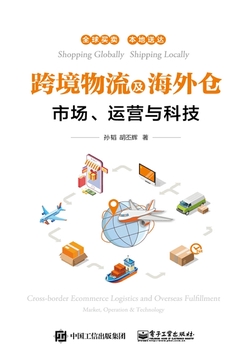
跨境物流及海外仓:市场、运营与科技
孙韬 胡丕辉
8499人在读
18.2万字总字数
¥53.4定价
孙韬 胡丕辉
本书围绕“全球买卖、本地送达”的中心主题,阐述跨境电商领域的热点话题,从不同视角对跨境电商的物流支撑进行分解,偏重于跨境物流的实际运作,兼有市场分析和运营实务,尤其是讲述科技应用对物流的引领作用。 本书共有九章:第1章介绍跨境电商物流市场。第2章讲述跨境进口物流渠道。第3章介绍出口直邮物流。第4章讲述境外清关及配送。第5章介绍保税物流,包括监管制度体系、业务场景、退免税、物流地产及综保区仓储等内容。第6章介绍海外仓建设运营,当前海外仓发展的市场动因及运营方式。第7章介绍电商平台物流。第8章介绍物流科技赋能,数字化、智能化、电商化等战略让很多创业型物流企业正在赢得先机。第9章讲述决胜跨境物流旺季。
第一部分:市场结构与核心模式 1. 产业全景与挑战 核心矛盾:跨境电商的信息流、资金流已线上化,但物流仍需线下长链条完成,导致时效、成本、透明度是主要痛点。 产业链角色:涉及托运人、承运人(航司/船司)、货运代理、报关行、仓储服务商、尾程派送商等多方。 发展趋势:从粗放发展进入集约化、提质增效阶段。海外仓是实现本地化、提升体验的关键节点。 The primary challenges facing European and American couriers include sluggish market growth, saturation in the business parcel sector, and the rise of e-commerce. Their collective strategy centres on vigorously developing international express services, supply chain solutions, and cost-effective land freight: "enhancing air freight efficiency, increasing land freight volumes, and integrating supply chains.原文:欧美快递商的主要痛点是市场增长缓慢、商务件市场饱和、电商崛起,而大家的策略都是大力发展国际快递、供应链和陆运经济件:“空运提效、陆运增量、供应链整合”。 The express delivery industry exhibits significant "network effects + scale thresholds." Establishing a cross-regional service network requires substantial upfront investment, with average revenue and costs per package remaining relatively stable, necessitating a sufficient scale of business volume to sustain operations. 快递业存在显著的“网络效应+规模门槛”,要建立跨地域的服务网络,前期投入巨大,包件平均收入和成本基本稳定,需要足够规模的业务量支撑。 Step 1: Understand the Client’s Key ConcernsIdentify and prioritize the client’s primary focus areas: Logistics provider selection Network planning Operational management authority Step 2: Develop a Tailored Proposal (Proposal)Draft a comprehensive proposal that directly addresses the above concerns, emphasizing strategic alignment, operational control, and partnership transparency. Step 3: Design the Integrated Solution (Solution)Create a customized logistics solution based on data-driven insights, including: Warehouse layout and location strategy Labor planning and productivity benchmarks SKU complexity and handling requirements Shipment volume profiles Delivery node density and service coverage Step 4: Conduct Assumption-Based Operational ModelingPerform scenario analysis using realistic assumptions to evaluate: Required workforce size and structure Warehouse capacity and throughput Impact of SKU variety on fulfillment efficiency Scalability under varying shipment volumes Optimal routing and last-mile delivery design Step 5: Establish Pricing Strategy Linked to Business DynamicsAnalyze the interdependencies among: Scope of services Fluctuations in shipment volume Cost structure (fixed vs. variable)Then design a pricing model that reflects actual business activity and shared risk. Step 6: Formulate a Differentiated Commercial OfferTo stand out from competitors, propose one of the following innovative pricing approaches: Tiered Volume-Based Pricing: Unit costs decrease as shipment volumes increase, incentivizing growth while controlling costs. Hybrid Fixed + Variable Model: Combine stable baseline fees (covering infrastructure and core team) with performance-linked variable charges, enabling mutual risk-sharing. This approach enhances reliability and demonstrates technical sophistication—key competitive advantages. Step 7: Prepare a Detailed RFQ ResponseCompile all elements into a structured response to the Request for Quotation (RFQ), clearly articulating: Solution design rationale Operational assumptions and validation Pricing methodology and transparency Value-added differentiators (e.g., technology platform, service reliability, flexibility) Step 8: Outline Implementation Roadmap (Roadmap)Provide a phased rollout plan, including: Discovery & final design (Month 1) System integration and facility setup (Months 2–3) Pilot launch and KPI validation (Month 4) Full-scale deployment and continuous optimization (Month 5 onward) Step 9: Highlight Competitive AdvantagesEmphasize strengths that surpass competitors: Reliability: Proven track record of on-time performance and service continuity Technology: Advanced TMS/WMS, real-time visibility, AI-driven forecasting and routing Partnership Mindset: Flexible commercial terms built on trust, transparency, and shared success 项目管理的完整步骤:根据客户关注的问题(物流选择、规划和运营管理权限),编写建议书(Proposal),制作出解决方案(Solution)、主体设计及路线图(Roadmap),详细准备针对客户报价邀请(RFQ)的答案,最好能突出优于竞争对手的亮点,如可靠性、技术性。对所收集的数据进行假设分析,评估人力、仓库、SKU、发运量及路线点等运营设计,测算业务范围、货量变化与报价体系之间的关联。例如,为了控制项目风险,报价模式采用按实际业务量相关的阶梯波动计价,或在熟悉彼此需求的基础上,结合固定及变动成本制定总体费用,互担风险。 合同物流项目的开发、实施与运营。每当签下一份合同,3PL都会有详细的商业条款,条款里会提及所需要的服务水平承诺,物流商要按照此标准制定合适的标准操作流程(SOP),有时SOP主流程也会成为合约的附件,项目操作团队按此流程执行。通常由售前(BD)或客户经理(KA)应对客户的一手需求,如表1-19所示,项目经理或行反复测试,以确保在运营的关键时刻不掉链子。例如,售后、宅配等需要面对消费者的项目,相对难以处理,需要特殊客服团队,对快递商的质量控制管理有时难以触及。产品经理(PM)组织关键的实施步骤及计划清单,虽然前期涉及职能部门较少,但在这个阶段中会把参与过程落实到细节。如果在商务阶段承诺了过多的个性化要求,则可能会让项目的实施投入过大。优秀的3PL必定是有科技能力的物流公司,以信息技术为组织工具,以数据为优化驱动力,连接上下游资源,实现解决方案输出。不同的项目可能SOP差异较大,甚至项目团队需要有一套独立的管理体系,在项目上线时必须对整个流程进行反复测试,以确保在运营的关键时刻不掉链子。例如,售后、宅配等需要面对消费者的项目,相对难以处理,需要特殊客服团队,对快递商的质量控制管理有时难以触及。 物流企业需警惕“用服务创新掩盖成本失控”的陷阱,真正的差异化应源于技术驱动的效率提升与资源集约化,而非廉价服务堆砌。Logistics companies must be wary of the trap of "using service innovation to mask cost overruns." True differentiation should stem from technology-driven efficiency improvements and resource consolidation, not the accumulation of cheap services.原文:在成本与市场的双重压力下,物流企业稍有起色便会提出增值服务的概念,搞点特殊服务、廉价的过度服务,表面上看似在寻找差异化,实质无异于将自己置于一个更加被动的处境。 2. 主要物流渠道对比 国际商业快递 (DHL, UPS, FedEx): 特点:直营网络,时效最快,价格最高。擅长文件、高价值急件。 趋势:面临商务件市场饱和,正向国际快递、供应链解决方案、经济陆运件转型。 国际空海运: 海运:承载90%以上贸易量,成本最低,适合大批量、重货、对时效不敏感的商品。 空运:时效快于海运,成本较高。分为仅限货机(CAO) 和可客货机(PAX) 运输。 跨境专线:针对特定国家/路向的专一线路,平衡时效与成本,是电商件主流选择之一。 邮政体系:网络最广,价格有优势,但时效较慢,追踪不完善。包括平邮/挂号小包、e邮宝、EMS等产品。 3. 关键服务商:货运代理与第三方物流 货运代理:核心价值是整合资源。向承运人订购舱位,为客户提供订舱、报关、运输、仓储等一站式服务。大型货代常成为航司/船司的销售总代理。 第三方物流:提供更深入的合同物流解决方案。服务流程包括:需求分析 → 方案设计与报价 → 签署SOP → 项目实施与运营。逆向物流(退换货处理)是重要且复杂的增值服务。 第二部分:跨境物流核心操作流程与难点 1. 全链路流程 出口:国内提货 → 出口报关 → 国际干线(空/海/铁)→ 目的港清关 → 尾程派送。 进口:海外提货/仓储 → 出口报关 → 国际运输 → 进口清关 → 国内配送。 关键概念: 头程:从发货地到海外仓的运输。 尾程:从海外仓到消费者手中的配送。 双清包税:货代负责出口国和目的国两次清关,并包缴进口税费(注意合规风险)。 Supporting logistics encompass overseas collection, overseas warehousing, export customs declaration, booking of space, import customs clearance, IT support, transhipment, multimodal transport and delivery services. Both domestic distribution and international transport operations are now well-established, with international shipping experiencing no congestion.原文:配套物流包括海外提货、海外仓储、出口报关、订舱、进口清关、IT支持、转运、多式联运及派送等服务,国内配送和国际运输这两项业务已经很成熟,国际运输也并不拥塞。 海外仓可以提供货物通关所需的资质、单据证明,还可以接收卖家、代购、平台往国内发的零散代购订单,提供分拣打包服务,以及远程虚拟库存监控和管理货物的发货方式。 进口海外仓已遍布主流货源地,如菜鸟国际在悉尼、大阪、首尔、奥克兰等地都设立了GFC全球订单履约中心,GFC仓便于海外商家就近备货和补货,并整合了消费者的交易、支付、物流及身份等信息,在货物入境清关时可实现预报,实时查看揽货、入出库、干线航班、转关清关等货物流转信息。 It integrates consumers' transaction, payment, logistics and identity information. During the entry clearance of the goods, it can predict the situation and allow real-time viewing of the logistics information such as cargo collection, inbound/outbound storage, trunk flights, and customs clearance for transfer.原文:并整合了消费者的交易、支付、物流及身份等信息,在货物入境清关时可实现预报,实时查看揽货、入出库、干线航班、转关清关等货物流转信息。 2. 通关:最大变数与合规核心 Cargo consolidation and import customs clearance are the most time-consuming steps.原文:集货周期和进口清关是主要的耗时环节 The customs clearance process includes arrival at the port, loading and unloading, stacking, tallying, declaration, inspection, taxation, and release. It accounts for approximately 10% of the total clearance time. The customs clearance process is a sequential operation from accepting declarations and reviewing documents to release.清关流程包括货物抵港、装卸、堆放、理货、申报、查验、征税、放行等多个环节,占整个通关时间的10%左右。海关通关流程是从接受申报、审单到放行等的“串联式”操作流程。 核心文件:包括商业发票、装箱单、运单、提单、产地证等。These documents include, but are not limited to, the Booking Note, Bill of Lading, Manifest, Waybill, and Parcel Post Receipt.报关资料包必须齐全。 主要风险:货物被没收、退回或要求补税/补充文件。 Single tracking number throughout .“一单到底”是跨境物流领域一个特有的概念,即一个物流单号完成从发到收的运作全程。实际上,经常有跨境包裹需要换号、换单。所谓换单,实际就是换承运商、换渠道或换物流产品 Usually, freight forwarders or overseas warehouses only act as the recipients of the bill of lading. Comprehensive Bonded Zones incorporate multiple outward-orientated functions, whilst Bonded Logistics Centres/Logistics Parks fulfil four principal international functions: transhipment, distribution, procurement and re-export trade. These facilities conduct bonded warehousing, simple processing for circulation, packaging and value-added services. customs declaration, inspection, logistics, tax rebates, foreign exchange collection, financing, insurance, settlement, and credit insurance on their behalf. 重点市场合规要点: 欧美:必须拥有EORI(经济运营商识别)号和VAT(增值税)号。美国进口需购买Bond(关税保证金),清关前需通过AMS/ISF等系统进行舱单预报。 日本:无VAT,但需缴纳消费税,大部分产品免税。 巴西:“全球最难清关”,查验率极高,税费重(>60%),物流基建差。 中东:地址系统不完善,货到付款比例高,签收率是挑战。 3. 海外仓:运营与选品 核心价值:提升配送时效、改善客户体验、支持退换货、降低长尾物流成本。 Overseas warehouses enable foreign sellers to generate tax revenue locally, address employment issues for residents, and provide consumers with local after-sales services. Competition among platforms for attracting merchants and driving traffic, coupled with preferential treatment for locally sourced shipments, has prompted sellers to shift towards overseas warehouses. Furthermore, to achieve stable growth and optimisation in foreign trade, national policies also support enterprises in establishing export ‘overseas warehouses’, thereby driving innovation in foreign trade business models.海外仓能够促成境外卖家为当地创税、解决民众就业问题,并为消费者提供本地售后服务。平台之间的招商竞争、流量竞争,对本地发货的流量倾斜,驱动了卖家转向海外仓。另外,为了实现外贸稳定增长和优化升级,在国家政策层面也支持企业建设出口“海外仓” ,推动企业发展外贸商业模式的创新。 Overseas warehouses represent a comprehensive optimisation and integration of existing cross-border logistics solutions, rather than merely bulk-storing goods in foreign warehouses. They synergise domestic and international resources including courier services, warehousing, labour, customs clearance, and agency services, serving as the culmination of cross-border logistics. Overseas warehouses also serve as pivotal support for export trade, functioning as integrated logistics hubs encompassing procurement, warehousing, distribution, returns processing, and supply chain management. They have evolved into comprehensive localised after-sales systems overseas, enabling sellers to expand their product offerings. 海外仓是一种对现有跨境物流方案的综合优化与整合,并不是简单地将商品批量存储到境外仓库,能够综合利用国内外的快递、仓库、人力、清关、代理等资源,是跨境物流的集大成者。海外仓还体现了对外贸出口的“支点”作用,是集采购、仓配、退换、供应链等于一体的新型物流中心,已演变成完整的“海外本地售后体系” ,帮助卖家拓展销售品类。 选品铁律: 必须是动销率高的畅销品,严禁用海外仓测款。 轻小件、低单价产品慎用,利润易被仓储成本吞噬。 规格标准化、销售稳定的SKU优先。 选址与建仓: 选址:靠近港口/机场的郊区,交通便利,配套齐全,劳动力充足。美国西部是热门区域。 Suburbs near airports and ports in more developed cities, where transportation facilities are convenient, supporting services are complete, and the coverage area is large, are places where consumers gather and where it is also convenient to formulate a first-mile plan. 面积估算:初始可参考“千单千平米”,但受SKU、货型、订单结构影响大。 In China, the rental warehouse area is usually evaluated based on the 1:1 ratio of order quantity and area. That is, approximately 1,000 orders require 1,000 square meters of warehouse space. However, most e-commerce platforms actually have a lower ratio than this. Many factors actually affect the warehouse area, such as order type, goods size, SKU quantity, frequency of entry and exit, regional division, shelf height and floor height, as well as picking methods, etc. 国内通常按订单量和面积1:1的关系来评估租仓面积,即1000单约要1000m2的仓库面积,但大多数电商其实低于这样的配比。实际对仓库面积产生影响的因素有很多,如订单类型、货物尺寸、SKU数量、进出频率、区域划分、货架高度和层高以及拣货方式等。 仓库类型:平面仓操作方便但稀缺价高;多层仓(厂房)利用率高、成本较低。 When choosing a third-party overseas warehouse, scalability should be taken into account. It is advisable to select a park with some vacant space. As the enterprise grows, warehouse expansion and relocation are inevitable. It is necessary to ensure that the enterprise has priority to lease the vacant warehouse. If the warehouse supply in the selected area is low, moving the warehouse will be a big problem. The presence of similar warehouse and distribution centers nearby can reduce the pickup costs for express delivery companies, making it easier to negotiate lower shipping rates. A good working environment and living facilities are essential for recruiting employees for overseas warehouses, especially when the warehouse is operating at full capacity. Adequate logistics support can ensure stable production. 第三方海外仓要考虑扩容性,尽可能选择有一定空置面积的园区,仓库的扩张和搬迁随着企业的发展不可避免,应保证企业对空置仓可优先承租。如果选址地区的仓库保有量低,那么搬仓是一个大麻烦。周边有相同类型的仓配中心也会降低快递商的取件成本,从而易于和快递商签订较低运价。好的工作环境、食宿生活配套是海外仓招聘员工的必要条件,尤其是在仓库满负荷运转时,后勤到位则能保证稳定生产。 Multi-story warehouses are mostly built in factories and have lower costs compared to flat warehouses; large-scale flat warehouses are relatively scarce in megacities. The advantage of single-floor warehouses is that the operations on the same floor can be visualised, which is conducive to coordination and management, and the planning of the assembly line is simpler. However, the overall space utilisation rate is lower than that of multi-floor warehouses.租仓库务必要考虑仓库的建筑结构,注意仓库的设计质量,同区域不同结构的平面仓与多层仓的价格相差30%~50%。多层仓多以厂房为主,费用相对平面仓较低;大面积的平面仓在特大城市较稀缺,单层仓的优点是同层操作可视化,便于协调管理,流水线规划较简单,整体空间利用率低于多层仓 第三部分:海外仓的精细化运营与管理 1. 仓储规划与作业 作业模式: 单元货格:传统“人到货”拣选,灵活但效率较低。 货到人:自动化设备(如AGV)将货送至工作站,效率高。 AS/RS:自动化立体库,空间利用率和效率最高,投资巨大。 库内规划:遵循ABC分类法,A类畅销品放在易拣位。实施存拣分离、大小件分区。随机存储可提高利用率,但需强大WMS支持。 Based on the inventory of goods, warehouse throughput, and order characteristics, select pallets, shelving, handling equipment, and auxiliary devices. 根据货物的库存、仓库的吞吐量、订单的特性,来选择托盘、货架、搬运及辅助设备。 库存管理KPI: 库存周转率 = 出库量 / 库存量,反映销售速度。 动销率 = 有销售的SKU数 / 总SKU数,反映SKU健康度。 先进先出原则对防止滞销至关重要。 2. 成本、风险与系统 成本结构: The operational costs of overseas warehouses include fixed expenses such as warehouse rental and equipment depreciation, as well as variable costs such as salaries, consumables, utilities (water, electricity, and gas), and freight charges.海外仓运营的成本包括固定成本、库房租金、设备折旧;可变成本包括薪资、耗材、水电网费、运费等。 头程运费:卖家自行承担或委托。 仓储费:按托盘/货位/体积/时间计费,通常有免租期。 操作费:按订单/件数收取,含拣货、打包、贴标等。 派送费:最大成本项,取决于与快递商的合约价。 主要风险: 滞销库存:70%折价清仓,19%销毁,11%退回。销毁在欧美也需付费。 退货处理:需预留20%-25%的专门空间与人员,流程复杂。 资金压力:回本周期长,仓库租约通常3-5年,前期投入巨大。 核心系统: WMS:仓储管理系统,管库内作业,是核心。 OMS:订单管理系统,对接客户和平台。 TMS:运输管理系统,管理物流渠道。 Third-party overseas warehouses and FBA may appear to compete, but in reality, they complement each other. FBA's first-mile transit, returns and exchanges processing, and relabeling services constitute significant business streams for many overseas warehouses.第三方海外仓跟FBA看起来是竞争关系,实际上是一种互补关系,FBA头程中转、退换货、换标是很多海外仓的重要业务。 Proper packaging safeguards goods from damage and minimises disputes over delivery quality arising from packaging defects, while also serving as a vital value-added service.Packaging formats vary considerably, encompassing multiple tiers such as inner packaging, individual items, cartons, pallets, and the outermost transport packaging. Superior packaging materials and packing techniques ensure goods are properly stowed and transported, thereby enhancing loading and unloading efficiency. Prices for common materials like cardboard boxes, adhesive tape, wrapping bags, and stretch film are rising, squeezing e-commerce profit margins.良好的包装能够保护货物不受损,减少包装质量带来的收货争议,同时也是一项重要的增值服务。包装形态多种多样,比如有内包装、单件、箱、托盘等多级包装,以及最外层的运输包装。良好的包装材料与打包技巧,能够使货物妥善配载和运输,进一步提高货物装卸效率。 Standardised operations, flexible management. Implementing a ‘Zone Ownership Model’, assigning specific shelves to designated personnel. Establish operational performance KPIs and daily monitoring mechanisms, such as setting the dispatch error rate below 0.02‰ and controlling inventory accuracy and product damage rates within 0.01‰.标准化作业,柔性化管理。可“责任田式分区” 、分货架到责任人,设定运营考核KPI及日常监控机制,如将发货错误率设置为低于0.02‰,将库存准确率、商品破损率控制在0.01‰以内。 To maximise warehouse capacity, mixed storage of multiple products in a single location is ideal. While warehouse management systems (WMS) commonly support random storage, overseas warehouses typically arrange goods according to ‘one product per location, one location per product’ or fixed leased storage positions to facilitate picking and prevent confusion. For instance, where sellers offer identical or nearly identical products, similar items should be avoided in adjacent storage locations.为了提高仓库容积, “一位多品”商品混放是最理想的,仓储系统WMS普遍支持随机存储,但为了便于拣选和避免混淆,海外仓通常按“一品多位、一位一品”或固定承租储位摆放货物。例如很多卖家的商品相同或差异微小,应尽量避免在相邻货位放置相似商品。 Warehouses must reserve 20% to 25% of dedicated space for returns and assign dedicated personnel to handle them. When returns are high, operational procedures require greater refinement, including sorting, testing, cleaning, relabelling, repackaging, and consolidating or separating boxes. 仓库要为退货预留出20%~25%的专门空间,配备专职人员处理退货,当退货较多时,操作流程需要更加细分,如筛选、测试、清理、换条码、包装、合分箱等。 Many value-added services rely on distribution partners, such as personalised delivery services including cash on delivery (COD), freight collect, proof of delivery (POD) return, scheduled delivery, address change and re-delivery, and self-pickup.很多增值服务要依赖于配送商,诸如代收货款、到付运费、签单返还、预约投递、改址再投、自提等配送个性化服务 For overseas warehouses, pricing models typically exclude forward freight, which may be arranged by the seller. Costs can generally be broken down into several components: storage fees, handling charges, and Last-mile delivery fees.海外仓在定价模式上,排除头程可能由卖家自送,费用大致可以分为仓储费、操作费和派送费等几部分。 Dead stock has always been difficult to dispose of. According to incomplete statistics, the average overseas warehouse seller holds approximately £10,000 worth of dead stock, with some reaching millions of pounds. Around 70% of this inventory is sold at a discount, 19% is destroyed, and 11% is returned or disposed of by other means. The payback period for overseas warehouses is lengthy, with warehouse lease contracts typically spanning three to five years.海外仓的回本周期长,通常租仓签合同的期限是3~5年 第四部分:行业前沿与巨头战略 1. 科技与数字化转型 智慧化:应用自动化分拣、无人仓、AI报关、可视化追踪、大数据预测等技术。 电商化:物流服务线上化,实现在线询价、下单、支付、追踪、结算、评价的一站式平台。 生态化:领先企业(如菜鸟)向“物流操作系统”转型,通过科技连接全球物流资源,自身作为“虚拟运营商”和赋能者。 End-to-end integrated logistics service system.端到端的综合物流服务体系 2. 巨头物流战略对比 亚马逊: FBA是其飞轮效应的基石,通过仓储、配送、客服一体化服务牢牢绑定卖家。 AGL提供端到端跨境物流,与FBA无缝衔接,形成闭环生态。 阿里巴巴/菜鸟: 打造“全球72小时达”智慧物流网络。 模式是生态平台,通过投资与合作整合全球仓、干、配资源,为速卖通等提供“无忧物流”等标准化产品。 Cainiao Network's E.T. Logistics Laboratory is dedicated to introducing cutting-edge technology to enhance logistics efficiency, having launched product platforms including electronic waybills, routing and sorting systems, a four-tier address database, robotic warehouses, parcel collection services, Eagle Eye anomaly monitoring, and intelligent cloud customer service. During the Single's Day period, Cainiao subsidised and empowered merchants and logistics providers through its intelligent warehousing and distribution capabilities: enabling advance inventory placement, forecasting order volumes across thousands of routes, providing real-time precise cargo volume alerts, promptly deploying personnel and vehicles to mitigate congestion, utilising electronic fencing to enhance sorting and delivery accuracy. Concurrently, in collaboration with Ant Financial, it opened up a series of payment, financial, and credit functions to logistics operators. Cainiao has established a logistics network capable of delivering goods worldwide within 72 hours.菜鸟通过打造“全球72小时达”物流网络 Cainiao has partnered with hundreds of cross-border logistics providers worldwide to launch comprehensive solutions including Worry-Free Logistics, Super Economy, Special Cargo Routes, and Overseas Warehouses, establishing a global logistics network with worldwide delivery capabilities. AliExpress has been deeply integrated with Cainiao's ‘Worry-Free Logistics’ service.菜鸟通过与全球上百个跨境物流商合作,推出了无忧物流、超级经济、特货专线、海外仓等跨境物流方案,搭建了一张具有全球配送能力的跨境物流网。速卖通已深入绑定菜鸟“无忧物流” Wish: 通过Wish Express等限时送达项目,以流量倾斜倒逼卖家使用海外仓,提升平台体验。 第五部分:风险规避与实用建议 1. 物流保险与理赔 保价服务:按声明价值(通常3‰-5‰费率)购买,赔偿上限为保价金额。务必如实申报货值,否则理赔不足。 未保价赔偿:通常按运费的3-5倍或固定上限赔偿,且有大量免责条款。 运输保险: 货物运输险:财产险。保障货主,险种多(基本险、综合险等)FPA\WPA。 物流责任险:责任险。保障物流商,按运费收入计费,保障范围更简单全面。 2. 给卖家的实操建议 启动海外仓:旺季前,用空运小批量试销,跑通流程后再决定是否大规模备货。 Before the peak sales season, it is recommended that sellers initially select several well-performing individual items. Ship several hundred pieces via air freight to overseas warehouses, utilising the free storage period for trial sales. This allows for a full run-through of the entire process from delivery to dispatch. Subsequently, analyse the product sales trends and replenish stock in small batches with frequent air freight shipments. If orders are favourable, increase the frequency of air freight replenishments or switch to sea freight. Given the elevated inventory risks associated with overseas warehouses, select products with relatively standard specifications and consistent sales performance. 合作第三方仓:考察其系统能力、合规支持、尾程折扣、增值服务。采用预付费模式控制风险。 避免成为“螺丝钉”:自建仓需达到日单1000+ 的规模效益门槛;使用第三方仓,日出5000单是其盈利平衡点。 关注合规:税务合规是生命线,确保在目标国有合法的进口商身份,并完成所有税务注册。 shipper/consignor; carrier; agent; recipent/consignee托运人、承运人、代理人、收货人 Charter Flights + Special Lines + Overseas Warehousing + Supply Chain Integration represents an ideal model for synergistic import-export resource interaction.
只恨此书读的有点晚…… 作者系统全面的介绍了跨境物流,进出口贸易的基本流程,概念,实践心得,以及点到为止前瞻观察,值得时不时回看温习。 感叹邮政系统还是有人才啊,虽然文笔稍显粗糙,可是贵在接地气,亦让读者轻松。
它聚焦市场格局,剖析运营痛点,还融入科技赋能视角,从仓储布局到物流链路,把跨境物流复杂生态讲得清晰。理论与案例结合,对从业者是实操指南,对想了解跨境电商物流的读者,也能帮其看透行业逻辑。不过部分科技应用分析偏浅,若想深入技术细节,会稍觉不足,但整体仍是跨境物流学习的优质读物,值得推荐.
像看论文一样,看的有点迷糊,很多英文简写代称,要是全称就好了
对于小白来说的确是普及了很多知识盲区。很有帮助,需要再读。
本书简评:纯知识类内容,国家队为这个行业初学者扫盲而写的书,和文笔优美、思想深邃这类完全没关系,但从工具书的角度讲,这本书非常足以满足要求,而且比零零散散的资料好多啦! 本书的内容不仅可以给跨境物流行业从业者学习,对于跨境电商卖家也非常适用。不仅如此,在很多书视为边角和浅尝辄止的仓储、科技以及延伸上,本书也非常认真,给出了专业且具有体系的解答。在应用以及未来的延伸上,本书站在整个行业的角度,给出了下一步的最终形态,由于正好和我这段时间见到的互相印证,而这本书是写于一两年前的,因此也颇具前瞻性。 感受嘛: 1,我看这本书的时候,读书笔记写了3.56万字以上,但不具备参考价值,因为我为了扫盲,都是大段大段的摘抄。但我本身是有一定外贸、电商基础的,依然大段大段的摘抄,可见这本书的信息密集度之高。 2,看完了,已下单实体书,这本书会成为我很长一段时间放在手边的重要参考资料。 3,啊,此刻我无比热爱国家队!
居然连亚马逊超量费都能提及,而且叙述准确。就算是有经验的亚马逊运营,都有可能不知道这个点,虽然与物流相关性不高,但让我蛮惊讶的。 本书给出了大量物流数据,也较为系统的科普了一下物流公司,整合的物流信息可信度高且蛮新的,对于从事2年亚马逊运营的我来说够用,经常听的一些名词如POD,保税仓,EORI与VAT的关系等都作了解释。但也有解释不全的知识点存在。总的来说,推荐。
思考,什么才是现代稀缺的,肯定不是繁多的物品
本书对海外仓配和物流运营及其自动化智能化技术做了全貌的介绍说明;有助于对跨境电商`仓配与物流管理的学习和理解。属于初中级专业参考书籍,可评分6~8分。
开拓了视野,补充了知识。 读着读着有点题外话的启发: 我们是在一个工作团队中服务其他人,人类的工作内容都是为了别人更好地生活。在科技的加持下,工作效率大幅提高。但工具总是工具,最终服务的是人。其实从古至今有什么不一样呢,无非工具和效率的区别罢了,人,人才是终极目的啊。工作,一切劳动皆有意义,转折点,抛弃余食赘行,去追求和创造属于自己生命节奏的生活!这是新的起点!