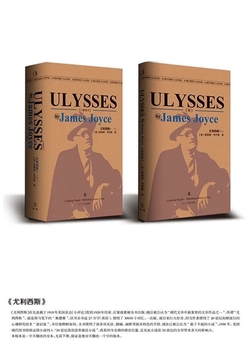
尤利西斯(英文版)
[愛爾蘭]詹姆斯·喬伊斯
4800人在讀
173.6萬字總字數
¥9定價
[愛爾蘭]詹姆斯·喬伊斯
《尤利西斯》首先連載於1918年美國雜誌《小評論》直到1920年結束。後緊接着被全書出版。隨後被公認爲“現代文學中最重要的文學作品之一”。所謂“尤利西斯”,就是荷馬筆下的“奧德賽”。該書全書近27萬字(英語),使用了30030個詞彙。一出版,就引來巨大好奇。因爲作者使用了20世紀初頗流行的心理研究技術“意識流”,並仔細斟酌佈局,全書使用了很多雙關語、隱喻、幽默等極具特色的手段。現在已被公認爲“最了不起的小說”。1998年,美國現代圖書館將這部小說列入“20世紀英語世界最佳小說”,將其列爲全榜的榜首位置,足見此小說給20世紀的文學帶來多大的影響力。
Reading Ulysses requires a particular patience, a willingness to decelerate and immerse oneself in a narrative where the plot is deceptively simple—it is, after all, merely an account of a single day, June 16, 1904, tracing the seemingly aimless wanderings of Stephen Dedalus, Leopold Bloom, and Molly Bloom through the streets of Dublin, yet its profound complexity arises entirely from the author's revolutionary narrative technique rather than from the events themselves. It was only through this engagement with the original English text that I could fully apprehend the distinctive humour Joyce so intricately wove into the fabric of his prose, a humour largely dependent on puns, linguistic echoes, and playful parodies that are inevitably, perhaps necessarily, lost in translation, thereby forming the essential soul of the work which reveals a sly wit hidden within a single homophone or an extended stylistic mimicry. He employs the grand scaffold of Homer's Odyssey with a characteristically jesting spirit, only to systematically dismantle its epic heroism by reducing its themes to the mundane minutiae of an ordinary advertising canvasser's day, a stark contrast that itself constitutes the novel's most profound and ironic joke. Joyce demonstrates little interest in celebrating the sublime; his central preoccupation lies instead in harnessing language to capture the unmediated, often chaotic flow of human consciousness, rendering those seemingly disjointed internal monologues that amalgamate memory fragments, sensory impressions, and fleeting street encounters into a collage which, for many, represents a more authentic psychological temporality than conventional storytelling could ever achieve. The reading experience is consequently akin to traversing a dense, at times bewildering, linguistic forest, where the journey is periodically illuminated by a sudden, clarifying flash of a pun or a witty observation, provoking a quiet, knowing smile. The enduring greatness of the book perhaps resides precisely in this radical redefinition of the novel's possibilities, refusing to provide easy answers or moral conclusions, instead choosing to simply present life in its raw, unvarnished state, so that upon finally closing the cover, the reader is left with the distinct sensation of having lived through an entire, albeit ordinary, day in Dublin.
我到底是爲什麼不自量力地開始讀尤利西斯啊!媽呀我就看進去前面一千字前言,然後一進入正文,啊…啊?通篇都是啥啊啥玩意兒啥啥啥? 據說每100個人讀尤利西斯只有10個人能讀完,不好意思我是那第11個人,果斷合上書本(退出頁面)、洗淨雙手、抽自己一巴掌:人貴在好自爲之好吧…到底是哈利波特不香嗎是權遊不妙嗎,實在不行去看沙丘帝國也行啊!我到底爲什麼覺得中文版的意識流小說都讀不下去,卻可以去挑戰英文版的意識流小說和全書那三萬個單詞啊!到底是爲什麼我這個才學會寫一二三的初學者,要來挑戰這個寫萬字的請帖啊!對不起我錯了,怠慢了! 書是好書,內容是好內容。有意願和能力和文學素養的朋友們值得一試,推薦有緣人閱讀。抱歉我就先撤了。
誰懂這讀了9個小時只讀完第三章抬頭一看已讀完6%的絕望。喬伊斯老師您不想讓別人看懂可以選擇不寫書(ಥ_ಥ)
如果某時我真切地感受到了一天的漫長,我便會開始讀《尤利西斯》。 可以相信,現代主義/意識流作品,永遠會給我帶來意想不到的體驗。 說不定以後會先嚐試讀讀喬伊斯的其他作品,比如《都柏林人》,《一個青年藝術家的肖像》。
有些世界名著就該讀英文版原著......反正都是讀不懂🐶
喬伊斯曾在給出版商的信裏寫道:“我試圖爲都柏林繪製一幅完整的畫卷,若有一天這座城市從地球上消失,人們可以依據《尤利西斯》重建它。”這個重建,應該是對人類靈魂,也就是那個充滿卑微與崇高、孤獨與聯結、迷茫與追尋的意識流現場。這種看似無序的跳躍、直接呈現人物內心活動的非線性敘事方式,讀起來或者聽起來很晦澀,經常要重複好幾次才能明白表面爲一人一日一城的流水賬,內核卻處處直擊現代人精神世界的荒蕪,展現在文化與宗教衝突下的身份認知困境。 喬伊斯將布魯姆平庸的一天對應荷馬史詩《奧德賽》里奧德修斯十年的漂泊,通過彼此慰藉與拯救,賦予這一天瑣碎的時間以循環不息的生命力。
我纔讀了個開頭,留一下紀念,純粹因爲前言裏“一時讀不懂不要緊,先收藏起來,放進您的書架裏,等您長大到某個時候,您會忽然發現,自己開始能讀,而且讀懂了作品的字裏行間意義時,那種喜悅感,是無法言述的,也是無與倫比的。您可能也會因此對走過的人生,有更深刻的感悟與理解。”這段話而買的書。“百年孤獨” “追憶似水年華”“尤利西斯”,集齊這三本感覺自己人生都圓滿了[捂臉][捂臉]
終於讀完了第二次,比第一次明朗了一些
I'm the first one������
意識流小說,鴻篇鉅製,讀完兩遍仍未讀懂的一本書。