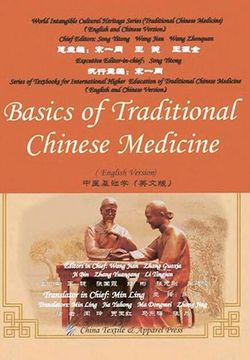
中医基础学(英文版)
宋一同
358人在读
68.8万字总字数
¥27.2定价
宋一同
本书以《中医基础学》为蓝本,撷取各类国内外中医学基础教材之长和多年教学经验编写而成,全面、深入地阐释和介绍了中医学基础理论,可以作为国际化中医学教材使用。翻译者多年从事中医学基础英语教学,有丰富的教学经验和翻译经验,是一本不可多得的国际化英语教材。
读的第一本英文版本中医基础,从英文角度认知中国医学。希望中医药发展壮大,为世界人民身体健康提供帮助
The fundamental theories of Traditional Chinese Medicine (TCM) form the theoretical framework of this medical system, primarily encompassing the theories of Yin-Yang and Five Elements, the Zang-Fu (Viscera and Bowels) and Meridian systems, the theories of Qi (Vital Energy), Blood, and Body Fluids, and the etiology and pathogenesis. These theories are the cornerstone of TCM, providing the theoretical basis for diagnosis, treatment, and disease prevention. Below is a detailed introduction to the fundamental theories of TCM: I. Theory of Yin-Yang and Five Elements 1. Theory of Yin-Yang • Definition: Yin and Yang are two opposing yet interdependent aspects in the universe, representing the laws and origins of the movement and change of all things in nature. • Characteristics: • Opposition: Yin and Yang are mutually opposed, such as cold and heat, movement and stillness, up and down. • Interdependence: Yin and Yang are interdependent; the existence of one is predicated on the existence of the other. For example, without Yin, Yang cannot transform, and without Yang, Yin cannot be generated. • Interacting: Yin and Yang interact with each other; the movement and change of one will affect the other. For example, when Yin is balanced and Yang is secreted, the spirit is governed. • Waxing and Waning: Yin and Yang are dynamically changing, with mutual restraint and waxing and waning. For example, when Yin waxes, Yang wanes, and when Yang waxes, Yin wanes. • Transformation: Under certain conditions, Yin and Yang can transform into each other. For example, extreme cold generates heat, and extreme heat generates cold. 2. Theory of Five Elements • Definition: The Five Elements refer to the five basic substances—wood, fire, earth, metal, and water—and their laws of movement and change. • Characteristics: • Generation: Wood generates fire, fire generates earth, earth generates metal, metal generates water, and water generates wood. • Control: Wood controls earth, earth controls water, water controls fire, fire controls metal, and metal controls wood. • Over-acting: Over-acting refers to excessive control between the Five Elements, such as wood over-acting on earth. • Insulting: Insulting refers to reverse control between the Five Elements, such as earth insulting water. • Applications: • Explaining Physiological Phenomena: The five viscera (liver, heart, spleen, lung, and kidney) correspond to the Five Elements. The theory of generation and control is used to explain the physiological connections between the viscera. • Explaining Pathological Phenomena: The theory of over-acting and insulting is used to explain the pathological transmission between the viscera. • Guiding Treatment: Based on the theory of generation and control, treatment principles are formulated, such as tonifying the mother in deficiency and purging the child in excess. II. Theory of Zang-Fu and Meridians 1. Theory of Zang-Fu • Five Viscera: • Heart: Governs blood circulation, stores the spirit, opens to the tongue, and manifests in the complexion. • Lung: Governs Qi and respiration, regulates the dispersion and descent of Qi, regulates water channels, governs the hundred pulses, and opens to the nose, manifesting in the body hair. • Spleen: Governs transformation and transportation, controls blood, opens to the mouth, and manifests in the lips. • Liver: Governs free flow of Qi, stores blood, opens to the eyes, and manifests in the nails. • Kidney: Stores essence, governs growth, development, and reproduction, regulates water and fluid metabolism, and opens to the ears, manifesting in the hair. • Six Bowels: • Gallbladder: Stores and excretes bile, governs decision-making. • Stomach: Receives and ripens food and drink, governs descent. • Small Intestine: Receives and transforms food, separates the clear from the turbid. • Large Intestine: Transforms and transports waste. • Bladder: Stores and excretes urine. • Triple Burner: Regulates the passage of fluids. • Extraordinary Viscera: • Brain: Sea of marrow, governs mental activities. • Bone Marrow: Nourishes bones. • Bone: Supports the body and protects internal organs. • Vessels: Channels for blood circulation. • Gallbladder: Stores and excretes bile. • Uterus: Governs menstruation and fetal development. 2. Theory of Meridians • Definition: Meridians are pathways that transport Qi and blood, connect the viscera and limbs, and communicate between the upper and lower, interior and exterior parts of the body. They include meridians and collaterals. • Meridians: • Twelve Meridians: Comprising three Yin and three Yang meridians of the hand and foot, totaling twelve meridians. • Eight Extraordinary Meridians: Including the Conception Vessel, Governing Vessel, Thrusting Vessel, Girdle Vessel, Yin and Yang Linking Vessels, and Yin and Yang Heel Vessels. • Collaterals: • Divergent Collaterals: Collaterals branching from the main meridians. • Floating Collaterals: Collaterals that float on the surface of the body. • Minute Collaterals: The smallest collaterals. • Functions: • Connecting: Connects the viscera and limbs, communicates between the upper and lower, interior and exterior parts of the body. • Transporting: Transports Qi and blood, nourishing the entire body. • Sensing: Senses and conducts information. • Regulating: Regulates the balance of Qi and blood, maintaining physiological equilibrium. III. Theory of Qi, Blood, and Body Fluids 1. Qi • Definition: Qi is the fundamental substance of life activities in the human body, with functions such as propulsion, warming, defense, and containment. • Classification: • Primordial Qi: Rooted in the kidneys, it is the original driving force of life activities. • Pectoral Qi: Accumulated in the chest, it permeates the heart and lungs, driving respiration and blood circulation. • Nutritive Qi: Circulates in the blood vessels, nourishing the entire body. • Defensive Qi: Circulates outside the blood vessels, defending against external pathogens and warming the skin. • Functions: • Propulsion: Promotes growth, development, and physiological activities of the viscera. • Warming: Warms the viscera, meridians, and skin. • Defense: Defends against external pathogens, maintaining health. • Containment: Contains blood and body fluids, preventing their loss. 2. Blood • Definition: Blood is an essential substance for life activities in the human body, with functions such as nourishment and moistening. • Functions: • Nourishment: Nourishes the viscera, meridians, and skin. • Moistening: Moistens the viscera, meridians, and skin. • Spiritual Transformation: Blood is the material basis for the spirit; sufficient blood ensures a vibrant spirit. 3. Body Fluids • Definition: Body Fluids are essential substances for life activities in the human body, with functions such as moistening and nourishing. • Functions: • Moistening: Moistens the viscera, meridians, and skin. • Nourishing: Nourishes joints and brain marrow. • Transportation: Transports nutrients and metabolic products. IV. Etiology and Pathogenesis 1. Etiology • Exogenous Causes: • Six Exogenous Pathogenic Factors: Wind, cold, summer heat, dampness, dryness, and fire. • Pestilential Qi: Highly contagious pathogenic factors, such as plague and cholera. • Endogenous Causes: • Seven Emotions: Joy, anger, worry, pensiveness, sorrow, fear, and shock. • Dietary Imbalance: Overeating, insufficient eating, or dietary preferences. • Imbalance of Work and Rest: Excessive work or excessive rest. • Other Causes: • Trauma: Falls, blows, and cuts. • Parasites: Parasitic infections. • Drug Misuse: Improper use of medications. • Medical Errors: Medical accidents or misdiagnosis. 2. Pathogenesis • Definition: Pathogenesis refers to the mechanisms of the occurrence, development, and changes of diseases. • Content: • Struggle Between Pathogenic and Defensive Forces: The struggle between pathogenic and defensive forces determines the progression of the
Human beings live in the natural and social environment, the body's physiological functions and pathological changes are certainly influenced by the natural and social environment. I truly believe in this! I have been working in the place with very cool AC system for 10 years. Under such cold and damp environment, the Qi and blood of my body started not circulating normally long time ago due to the cold can coagulate Qi and blood of our body.TCM helped me lot to find the right treatment because TCM has the advantage on distinguishing cold and heat pathogenesis.
非常喜欢,既能了解中医知识,又能学习英语,很棒!